Why normal ALP is a major PBC treatment goal

Alkaline phosphatase (ALP) is a primary lab value used to track primary biliary cholangitis (PBC) disease progression.

doctor's consultation with a woman about normal ALP levels as an important treatment goal in PBC (actor portrayal)

Actor portrayals.

Growing evidence suggests that any ALP number above the “normal” range can increase the risk of disease progression. This disease progression can ultimately lead to permanent destruction of bile ducts and additional liver scarring.

KEY LIVER FUNCTION TESTS AND RANGES

Lab values used to monitor your PBC

Liver function tests are blood tests that measure how well your liver is working and may also help your doctor see how you are responding to treatment for PBC.

ALP is a key lab test result that is looked at when tracking your PBC progression. The normal range that’s listed in ALP lab results changes from lab to lab, but a common range is about 42 to 125 IU/L.
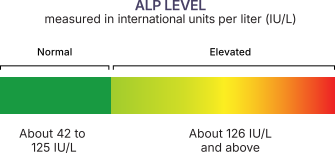
When ALP is consistently above normal, risk increases.

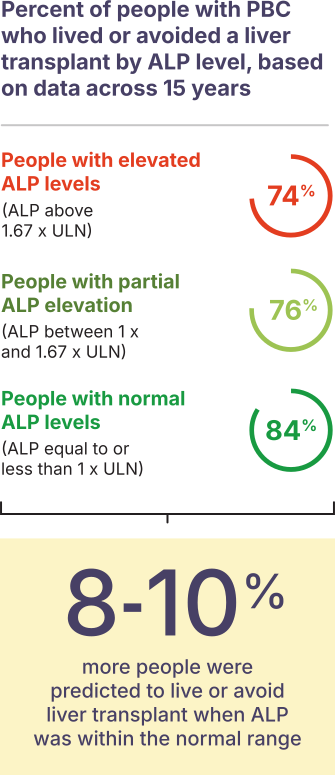
Studies show that the more someone’s ALP levels decrease and stay closer to normal, the lower the potential risk of liver damage.

Other liver lab value goals

  • Bilirubin: 0.1 to 1.2 mg/dL
  • Antimitochondrial antibody (AMA): 0 antibodies present
  • Alanine transaminase (ALT): 4 to 36 U/L (0.07 to 0.60 µkat/L)

Normal value ranges may vary slightly among different labs. Talk to your healthcare provider about your specific test results.

IMPORTANCE OF ALP NORMALIZATION

Why is having an ALP within your normal range important ?

Normal ALP levels were associated with:

  • Reduced risk of disease progression
  • Reduced likelihood of needing a liver transplant

Researchers predicted PBC survival rates based on normal total bilirubin and ALP levels using data collected over 15 years. Survival estimates were calculated using the number of people who died after liver transplant or for any other reason—this was the main measurement of the study.

Medical charts were collected from 17 centers across Europe and North America, and researchers studied follow-up data from 3,059 people to estimate how long a person may live with PBC based on normal total bilirubin and ALP level. The study included people treated with ursodiol and people who were untreated. Survival estimates included 2,005 people who were treated with ursodiol and reached a normal total bilirubin at 1 year.

ULN=upper limit of normal.

Stable doesn’t always equal normal

a woman talking to a doctor about her symptoms (actor portrayal)

Actor portrayals.

Even if your ALP decreased and is stable (not going up) with first-line (1L) treatment, you could still be above normal ALP range. This could put you at risk for liver damage or worse outcomes. That’s why it’s so important to advocate for yourself to hit normal levels.

Second-line treatment (2L) may be needed to help lower ALP to normal

Some patients still taking 1L PBC treatment may not reach their normal ALP level or may have side effects. If you’re not meeting your PBC lab goals, your doctor can help you decide if adding a second therapy will help.

The main goal of PBC treatment is normalization of ALP.

Marina Roytman, MD, FACP, FAASLD
Clinical Professor and Director of the Liver Program, Fresno-UCSF

quote from Dr. Marina Roytman, "The main goal of PBC treatment is normalization of ALP."

Person featured was compensated by Gilead.

The information provided is not meant to override your treatment plan or advice from your healthcare team.

Discover how first-line and second-line therapies are used to treat PBC