PBC fatigue and how to manage it
Fatigue is a common symptom of primary biliary cholangitis (PBC) and may be related to other symptoms such as itch.

Actor portrayal.
While difficult to manage, there are strategies you can try to reduce fatigue and get support. Sharing your symptoms with your doctor is important so they can understand how fatigue affects you and offer potential solutions.
CONNECTION BETWEEN SYMPTOMS
A constellation of symptoms
People with PBC fatigue often experience other symptoms such as itch, brain fog, or stomach (abdominal) pain. These symptoms are often interwoven.
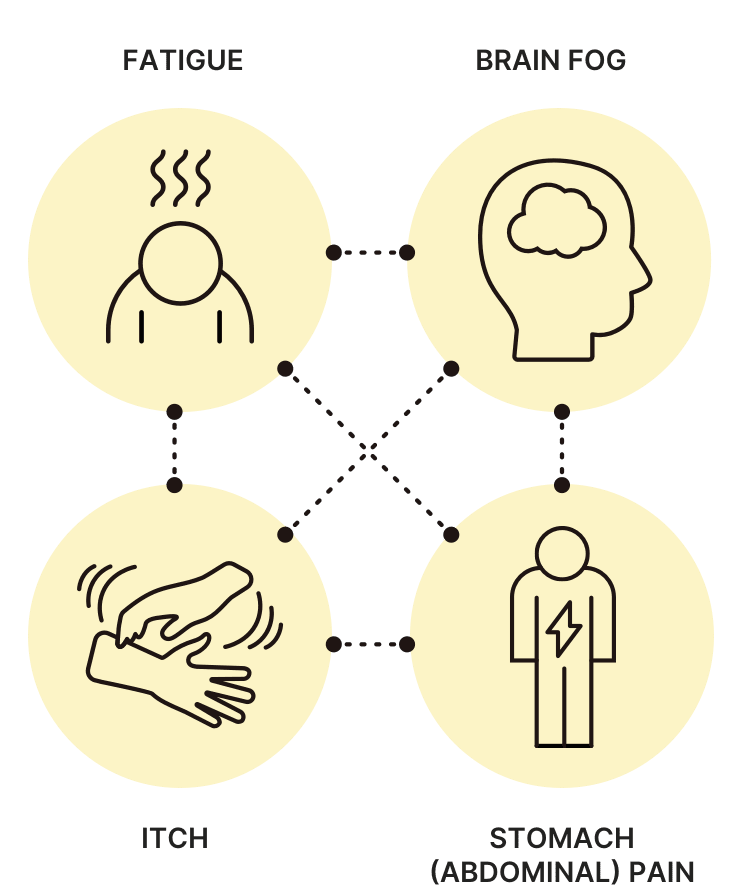
Because fatigue can be hard to isolate as its own unique symptom, considering your PBC symptoms as a constellation or a web can help you explain what you’re going through. It can also help you find ways to manage and improve your PBC symptoms through treatment and lifestyle changes.

Fatigue, which itching at night can make worse, is a common PBC symptom that often affects people’s day-to-day lives.

Sitting down and resting or even trying to take a nap didn’t help. The feeling just wouldn’t go away.
Suzanne Anderson, living with PBC

Person featured was compensated by Gilead.
STRATEGIES TO MANAGE FATIGUE
Everyone’s experience with fatigue can differ, but here are some ideas that others have found helpful. Talk to your healthcare team for specific advice or recommendations for you.
Some good sleep habits to try out:
- Avoid daytime naps lasting less than 30 minutes
- Go to bed at the same time each night
- Get out of bed at the same time each day
- Avoid or limit screen time before bed
- Keep your room cool and dark at night
- Avoid or reduce caffeine and alcohol
- Take a relaxing bath about 2 hours before bed
You may also try keeping a sleep diary for a few weeks. This could help your doctor spot any patterns or potential triggers and recommend helpful solutions.
While exercise may seem impossible when you’re exhausted, try to take advantage of days when you do feel up to it, and rest on the days when you need it.
Adjusting your diet can also make a difference. While there is no one diet proven to fight fatigue, adding foods that fight inflammation can help—as can avoiding foods that may add to it. The Mediterranean diet is often recommended for its abundance of healthy, anti-inflammatory foods.
Here are some foods that can help fight inflammation:
- Tomatoes
- Olive oil
- Green, leafy vegetables (eg, spinach)
- Nuts (eg, almonds, walnuts)
- Fatty fish (eg, salmon, mackerel, sardines)
- Fruits (eg, blueberries, strawberries, oranges)
It’s completely normal to feel overwhelmed, anxious, or sad at times. While PBC may not be the only cause of mental health conditions, it can add stress and pressure that you can’t control, making you feel off-balance.
Short-term strategies such as deep breathing, mindfulness, or progressive muscle relaxation (PMR) can help in the moment when things feel rough. Regular sleep, exercise, and staying connected with others can support your mental health over the long term.
Finding professional mental health support from a therapist, counselor, or clinical social worker can help you build coping strategies, improve how you see yourself, and reduce anxious or negative thought patterns. Your healthcare team may be able to recommend someone or help with finding a mental health practitioner who is accessible to you.
I’ve learned that I have PBC. PBC does not have me.
Suzanne Anderson, living with PBC

Person featured was compensated by Gilead.
COMMUNICATION AND SUPPORT
Prioritize, communicate, delegate
Try this exercise by sorting daily tasks into 4 categories: higher priority, lower priority, things I must do, and/or things others can do.
Flip card for an example

HIGH PRIORITY
I must do
HIGH PRIORITY
No one can go for me, and I must go today
HIGH PRIORITY
Someone else
could do
HIGH PRIORITY
I can ask if the parent of a friend at school can pack

LOW PRIORITY
I must do
LOW PRIORITY
No one can go for me, but it can wait for another day
LOW PRIORITY
Someone else
could do
LOW PRIORITY
Can wait until tonight; partner or kids can help with task
Complete this exercise with your partner, children, close friends, or neighbors who are in your support circle. This can build a sense of collaboration and community—everyone can pitch in where they feel like they can best contribute their time and energy.
Practice self-compassion
Giving yourself credit is important. Having chronic fatigue does not mean you’re lazy or not contributing value at work, home, or with friends. Try a few of these reflection prompts to practice a simple self-care technique:


Actor portrayals.


Share and receive advice from others who are living with PBC, too.
This information is not intended to be medical advice. Any medical concerns or questions regarding PBC should be discussed with your doctor.